
Raising Monarchs


Michelle Wysong is a retired biology teacher with a most interesting and noble hobby: raising monarch butterflies. More accurately, she incubates them from egg to butterfly in her home each year during their migration.
Most of us are familiar with the concerning decline in the population of monarch butterflies; maybe you’ve seen promotions for planting milkweed as a means of supporting monarch survival. Wysong takes the support effort to a new level. The whole incubation process takes approximately three weeks, and Wysong says it’s actually pretty easy. She collects milkweed leaves (grown in her yard) on which Monarchs have laid eggs. Initially, Wysong places them in small plastic containers, eventually moving to larger enclosures as they morph and grow through caterpillar and chrysalis stages to emerge as butterflies. The only requirements are to keep the larvae supplied with milkweed leaves and keep their enclosure clean. This process can be completed in the house, garage or outside, as long as the larvae are fed and protected from predators.

“In the wild, Monarch eggs have many predators,” explains Wysong, “including birds, insects and small animals. The survival rate for Monarch eggs in the wild is about ten percent. When raised and protected, the hatch rate is close to 100%,” she said.
Wysong was inspired to this mission by her mother, who raised Monarchs for many years until health issues prevented it and Michelle took over the practice. The need is real. According to the National Wildlife Foundation, the overall population of Monarch butterflies has declined by 80% in the last few decades. “Monarchs are critical cross pollinators, an important food source, and act as a bellwether for broader ecosystem health,” stated Wysong. The primary cause of monarch decline is loss of habitat via development and use of insecticides.
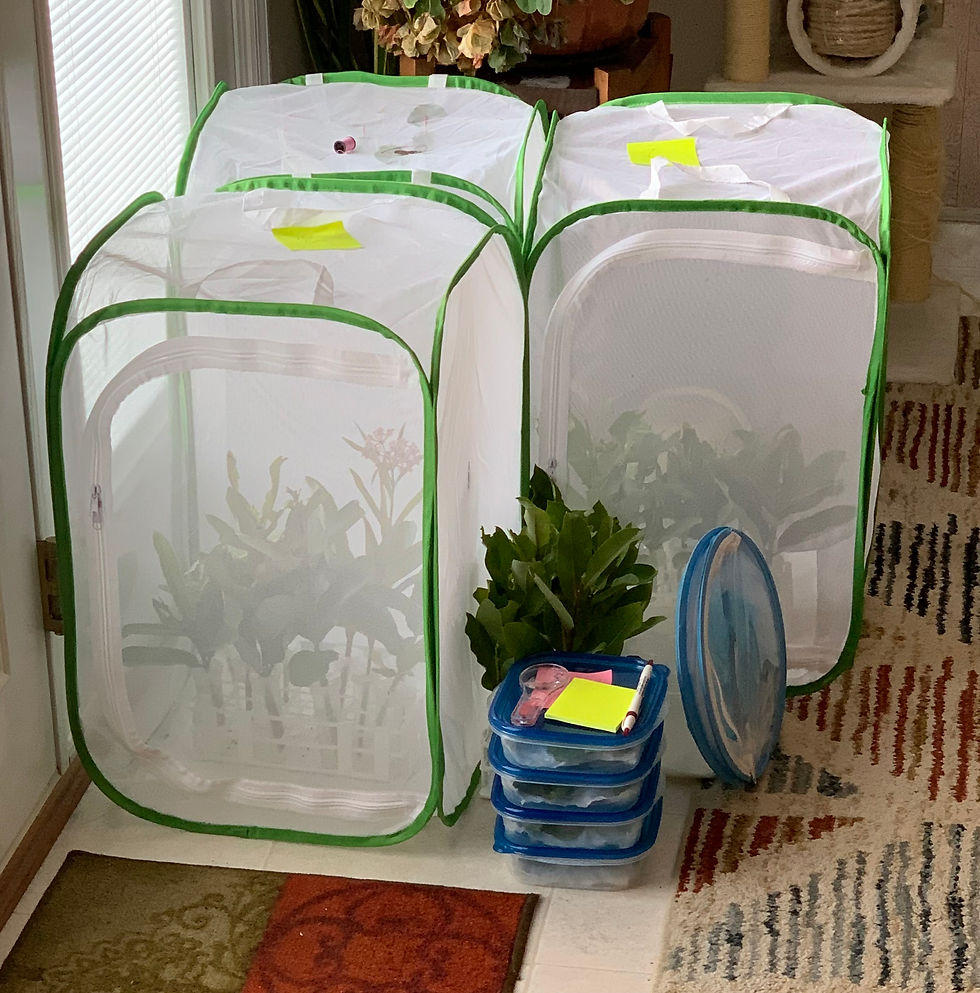
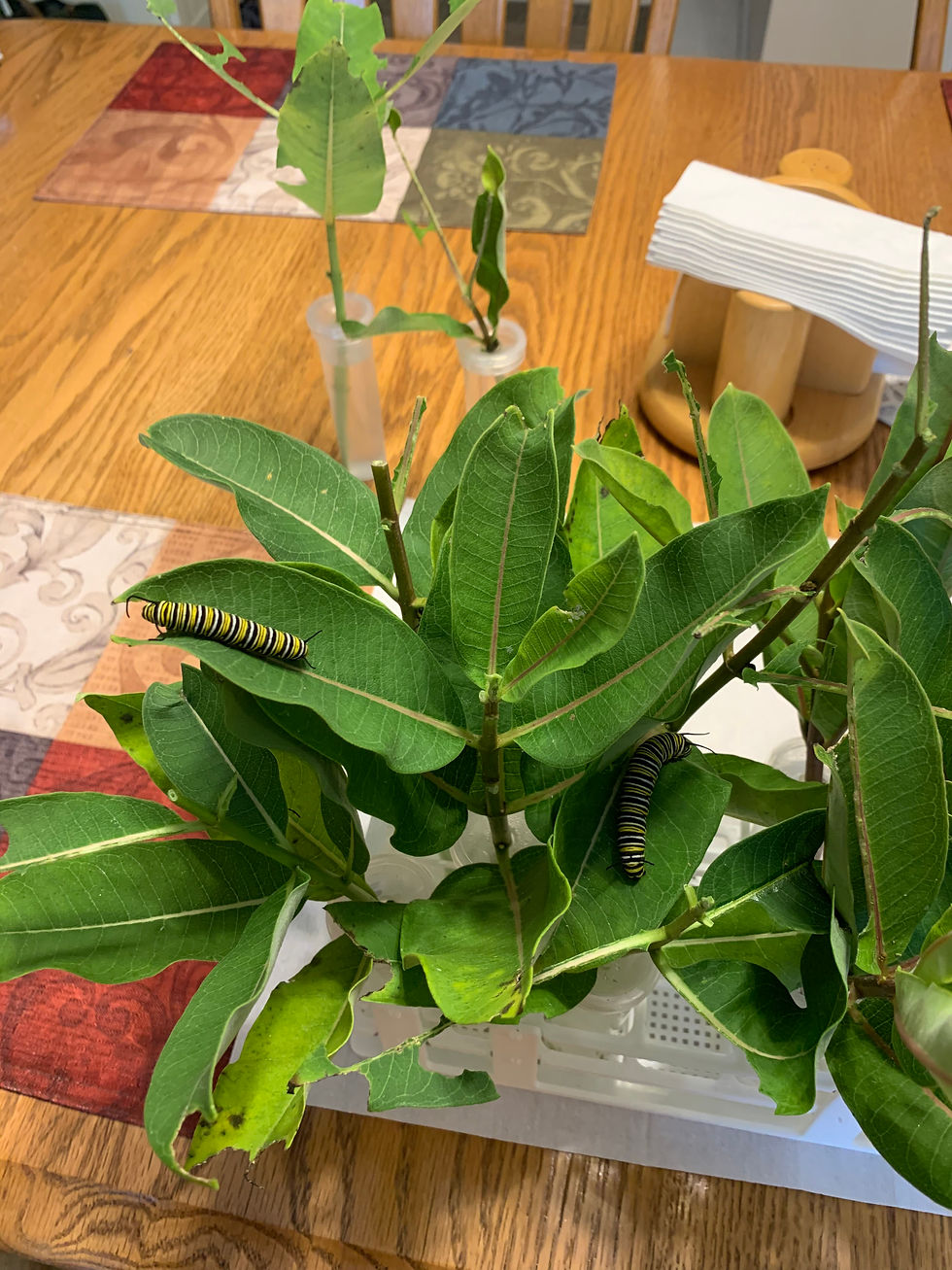
Wysong is not only committed to supporting the monarch population, she is extremely knowledgeable about the species. “This is where my career as a biology teacher is obvious,” she explains as she offers this overview of Monarchs: It takes four generations of Monarch butterflies to complete one full migration cycle between Mexico and Canada. Ther first generation hibernates in Mexico, lays eggs and dies. Those eggs hatch as the second generation, which travel north to Ohio and other areas along the east or west corridors, where they also lay eggs and die. The third generation continues to Canada following the same cycle. These eggs, however, will spawn what is known as a super generation of monarchs. These butterflies are larger, including larger wingspan, to equip them for the long journey all the way back to Mexico.
Interested in doing your part to support the monarch population? Here are three ways to help: First, plant native species, specifically Milkweed, which is the only host plant for monarch caterpillars. Second, stop spraying insecticides, which devastate monarch and countless other insect populations. Finally, consider providing a hatchery for monarchs. If you have questions for Michelle Wysong on best practices, email her at Wysong4663@gmail.com.

Here are additional local resources to find out more about supporting monarch butterflies:
Monarch Maniacs of Ohio Facebook group (recommended by Wysong)
Cincinnati Nature Center: Leads the “Milkweed to Monarchs” initiative, promotes seed sourcing and hosts monarch monitoring workshops.
Cincinnati Zoo & Botanical Garden: Offers the “Plant for Pollinators” challenge, native plant sales, and educates on planting milkweed and other nectaring plants.




Comments