
Reading Ishmael Again—and Seeing the World Differently


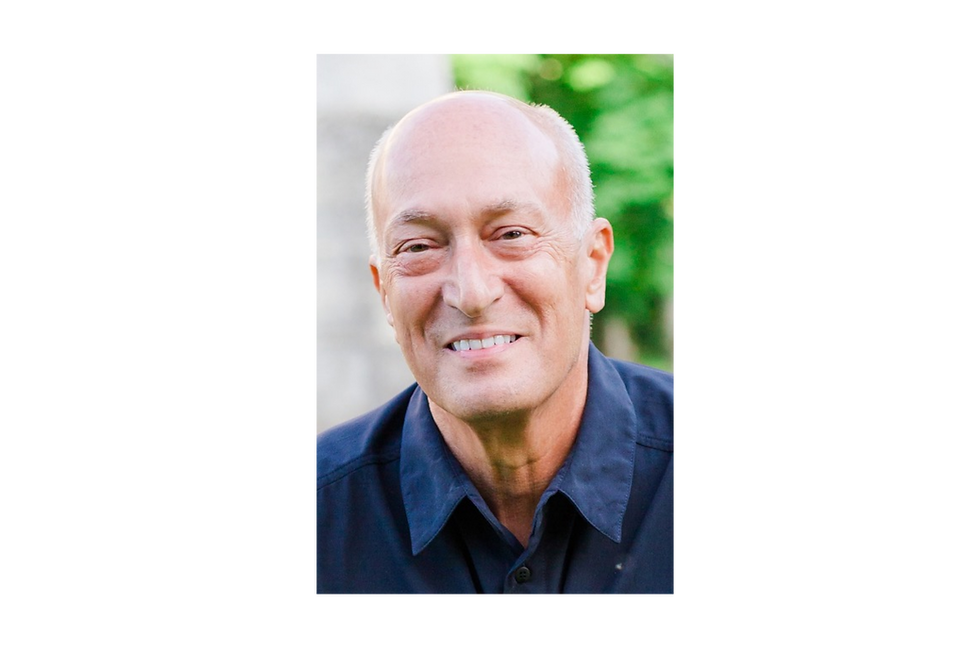
By. Mike Meldon
This past summer, I reread Ishmael by Daniel Quinn for the third time- this time with my daughter, Anna. Not many books get that kind of repeat attention, and even fewer manage to hit differently each time. Ishmael does. Every time I return to it, it feels less like rereading a book and more like picking up a conversation I’m not quite finished having- or need to refresh.
At its core, Ishmael asks a pretty uncomfortable question: What if we’ve been wrong about our place in the world or the path we've taken? Modern society tends to assume that humans are the end goal of creation—the peak of evolution, the species everything else was leading toward. Quinn gently but persistently pushes back on that idea, not by blaming or shaming, but by asking us to zoom out.
One of the moments that always sticks with me is Quinn’s brief mention of the jellyfish. By our standards, jellyfish are simple creatures. And yet, they’ve been around for hundreds of millions of years, surviving mass extinctions that wiped out far more complex species. That alone pokes a hole in the idea that evolution is a straight line moving toward something “better,” with humans waiting at the finish line. If success is measured by persistence, the jellyfish might have a stronger case than we do.
That realization flips the script. If humans see themselves as the endpoint of evolution, what’s to say other long-surviving species didn’t once occupy that same mental space? The jellyfish didn’t fail to become human. Evolution just wasn’t headed anywhere in particular. That’s a humbling thought—and a necessary one.
On a personal level, this is where Ishmael connects most strongly for me. I’ve always felt empathy for the natural world and found peace in it, but it wasn’t until a few years ago that I really began to grasp the scale of the damage humans have done. Looking at our history—and where we seem to be headed—through that lens changes how you see almost everything. That shift became even clearer when I helped found the local nonprofit Love Our Land, which focuses on helping people understand the biodiversity crisis and how we can all play a role in bringing biodiversity back.
Once you start seeing how interconnected life really is, it becomes hard to keep pretending that humans are somehow outside the system.

One of Quinn’s most useful ideas is his distinction between “Takers” and “Leavers.” Taker culture, which describes modern industrial society pretty well, operates on the assumption that the world belongs to us—that land, water, and other species exist mainly for human use. Leaver cultures, on the other hand, see themselves as part of the ecosystem, bound by limits and guided by balance rather than control.
What makes that idea uncomfortable is how familiar it feels. We’re often taught that human society developed the way it was “meant to,” as if there were no other viable paths. Ishmael suggests something else entirely: that somewhere along the way, we probably took a wrong turn. Not out of malice, but out of a story that told us we were separate from—and superior to—the rest of life.
That perspective even makes old stories feel new again. I can’t help but think about the Garden of Eden. What if that story wasn’t really about punishment, but about separation? About humans stepping out of the natural system and placing themselves above it? Seen that way, the story feels less like ancient mythology and more like an early warning.
And maybe there were always people who saw this coming. Throughout history, there were likely communities who recognized the danger of pulling humans out of the ecological web and tried to push back. In many ways, that’s still happening today. Scientists, Indigenous voices, conservationists, and everyday people are all saying some version of the same thing: something is out of alignment.
What strikes me most on this third reading is that Ishmael isn’t really a book about saving the planet. It’s a book about changing how we see ourselves.
Humans aren’t insignificant—but we aren’t exempt, either. We are nature. And if we want a future here, we have to learn how to fit into the system, not stand above it.
More than anything, Ishmael argues for a paradigm shift. A fundamental change in how we understand progress, success, and our place in the living world. That shift doesn’t come from guilt or fear, but from perspective. Once you start seeing humanity as part of a much larger story—not the point of it—it becomes difficult to go back to the old way of thinking.
That’s why I think this book matters right now. We don’t just need better technology or better policies; we need a better story about who we are and how we belong. For anyone willing to question the assumptions we’ve inherited and consider a different way of seeing the world, I highly recommend putting Ishmael on your “to be read” list. It has a way of staying with you—long after you’ve turned the final page.


Comments